Friday, September 28, 2012

Invisible

I've just recently been given a Nook, so I am downloading books to read that I don't have to wait for in the mail, or that are too heavy for me to hold on to... one excuse is as good as another I suppose - I love my Nook!

The book I have just finished digitally reading is "Invisible" by Leena McCourtney, the first book in her "Ivy Malone" series. It is Christian mystery, which I did not know when I downloaded the book, so that was a nice surprise! It isn't "beat you over the head with a bible"-type Christianity; it is just weaved in here and there, like it is natural - which, of course, for Christians, it is!

I love murder mysteries in general, but the main character in this series of books refers to herself as a LOL (little old lady). Ivy is enchanting, vibrant, has "senior moments", talks to herself and enjoys solving mysteries that crop up around her. It was such a great and fast read for me that I've already downloaded the second book in the series, which picks up exactly where the first book leaves off, and am reading like crazy again!

I believe you have to like the main character in books, especially mysteries, or you're just going to be miserable throughout the whole book (or books). I tried to read the "Alphabet" mysteries, but I just couldn't stand the main character (my son has read every one of them!); no accounting for taste, I guess.

Give the book a read and tell me what you think of Ivy, of the part Christianity plays in her life, or anything else about the book that stands out to you. I'll enjoy reading your comments!

Tuesday, September 25, 2012

Conservative Reformation and Its Theology

This book is not for the faint of heart! It is over 800 pages of 19th century Lutheran and Reformed theology. There is historical background, but the "meat" of the book is the struggles to remain "orthodox" to the Reformation theology of Martin Luther, and how that was or was not accomplished in the 1800s. I do not recommend this book for just anyone. Whoever reads this must be prepared to encounter rhetoric, changing theological terms, changing theological ideas, outright untruths, the truth based on scripture - often over and over, and over again! I must confess that I read until the last 50 or so pages and couldn't take it anymore; normally that is about when I can't put a book down; in this case I couldn't force myself to pick it up! This book by Charles Porterfield Krauth is, I think, a good example of Christians trying to come to grips with the changing culture and still remain biblically faithful. This is brought to bear in simply reading the Contents: one section is titles, "History and Doctrines of the Conservative Reformation; Mistakes Corrected." It should not be surprising that some of the controversies that this book discusses are: The Lord's Supper, Baptism, The Person of Christ, and Original Sin - all topics still debated today. What is conferred in this Supper? Is it the same for the believer and the unbeliever? What is conferred in Baptism? Who is Jesus? Are we born poor, miserable sinners incapable of saving ourselves, or can we work with God on our salvation? Like I stated at the beginning, this book is not for the faint of heart, those who do not know what they believe and why. It is a deeper study of the issues facing the Church in the 19th Century and how the theologians engaged them. I probably should have read it slower, and then I might have fully finished reading the book, but my mind and heart were no longer engaged near the end - too much repetition, I think, is responsible for my lack of completion. Let me know if anyone has finished this book and what you thought of it.

Monday, September 24, 2012

Granuaile: Grace O'Malley - Ireland's Pirate Queen


The Story of Ireland's first female pirate predates other female pirate stories by about 200 years! The book is written by Ann Chambers; she seems to have done extensive research for this book, though there is scant reference to this particular pirate. Fortunately for all pirate lovers, Granuaile had contact with Queen Elizabeth I of England, so there are court records that correlate with the "lore and legend" of this unusual woman. Granuaile (or Grace) lived from approximately 1530 to 1603 (the same year Elizabeth I died).

This is a time in Ireland's history in which all they cherished as traditional Gaelic ways was crumbling at the feet of those who inherited the system; there was constant infighting between houses (O'Malley's, O'Donnell's, etc.), besides trying to intermarry or otherwise ingratiate your clan with that of the MacWilliam (the head of all clans), so that your son might inherit the title upon the MacWilliam's death. It was a fatally flawed system from which the rest of Europe was moving past, and coming out the stronger for it. It is also at this time that England claimed Ireland as her own, and slowly moved to institute English rule of law into what they perceived as a backward, barbarian land.

Grace, though captured and imprisoned for piracy not only is set free, but she is able to provide for two of her sons (still living after a battle for the MacWilliamship of Ireland). She takes her case directly to Elizabeth I, sails in her ships to England to meet the queen (in her mind on an equal footing) so that things will be set right in the eyes of England as to the situation. She was a mistress of land and sea without rival; even her husband's bent to her will, as did at least 2000 men who made up her power-base.

It is a good read, but prepared for the battle for the truth of Grace's adventurous life; some scholars disagree that she was real, let alone accomplished what she did. I feel the evidence is compelling for making the folklore based on a true, historic woman. Read it and tell me what you think.

I will end this with part of one of many poems about this famous/infamous woman - Granuaile of Ireland:

The dauntless race with Spartan soul
Stands on the outer wall.
Regardless of the shower of balls
That fast around them fall.
The English come with marshalled strength
And nerved with deadly hate
They fircely clash thourh friends and foes
And gain the foremost gate.

But right before them face to face
The clansmen Mayo
Start up and greet those robbers well
With thrust and sabre blow.
An rushing fierce as mountain stream
Through dark and flooded glen
Leaps to the gate, the dauntless Grace
And all her fearless men.

Hurrah! Their spears are backward borne
Their blood-red flag is down
And Sydney vanquished and pursued
Spurs hard to Newport Town.
This lesson taugh the Saxon churl
To dread a FGree-man's blow
When the dauntless Grace O'Malley
Fought and conquered in Mayo.

Friday, September 21, 2012

Ancient Christian Writers - St. John Chrysostom (Beautiful-Mouth)

I had to reorient my thinking when it came to reading this book. John Chrysostom dies in 404 AD, I believe, so the way things are phrased are different than how the Church "talks" now. Other than that, the book has interesting information on Early Church instruction, rites and rituals about baptism (Did you know that the some of the churches baptized the newly instructed in the nude? That was an eye-opener to me!).

I found that, by and large, the book could have been written today, except that it would be misunderstood overall (because the words have different meanings now). The book contains solid, biblical theology on many topics, not just baptism, though that is its main focus. John was not called "beautiful-mouth" for nothing! He can turn a phrase so well and reword scripture so that the common person can understand what God is talking about. The following are some quotes I found to be simply great:

There came out from His side water and blood. Beloved, do not pass this mystery by without a thought. For I have still another mystical explanation to give. I said that there was a symbol of baptism and the mysteries in that blood and water. It is from both of these that the Church is spring through the bath of regeneration and renewal by the Holy Spirit, through baptism and the mysteries. But the symbols of baptism and the mysteries come from the side of Christ. It is from His side, therefore, that Christ formed His church, just as He formed Eve from the side of Adam." (The Third Instruction:17)

That you may know how great a good this is, please consider those who feel great excitement over the affairs of the present life. These men are just like a shadow and worth no more. When they see someone continually talking with an earthly ruler, how great do they judge him to be!...But what would you say of a man who was deemed worthy of talking with God, not of the things which are on earth but about the remission of his sins, about the forgiveness of his transgressions, about protecting not only the gifts already given but also those which are going to be given and about the blessings of eternity? If by his prayer he should obtain the help of heaven, such a man would be happier than the king who wears the crown. (The Seventh Instruction:26)

And why, someone will say, if the bath takes away all our sins, is it not called the bath of the remission of sins, or the bath of cleansing, rather than the bath of regeneration? The reason is that it does not simply remit our sins, nor does it simply cleanse us of our faults, but it does this just as if we were born anew. For it does create us anew and it fashions us again, not molding us from earth, but creating us from a different element, the nature of water. (The Ninth Instruction:20)

There are twelve Instructions in this volume, each feeding off of the others, to give a wonderful account of what baptism and the Lord's Supper (the "mysteries") truly offer, namely, the forgiveness of sins and rebirth. The book also helps the reader understand what common practice in the Church was, but also what were its problems, like the taking of oaths (taking the Lord's name in vain - using God to prove how earnest we are - "as God is my witness").

John's description of the washing of regeneration by water and the Word is spellbinding! He describes these new converts to The Faith as rays of light, outshining the sun, as stars that still are bright during the day, and more. It is an uplifting and instructive book, worth reading.

Wednesday, September 19, 2012

Books on "Military Intervention"

I have decided to review two books with this entry because they have many similarities. The books are: China, 1900: The Eyewitnesses Speak, published in 2000, about the Boxer Rebellion; and The Immaculate Invasion, published in 1999, about President Clinton's invasion of Haiti in the mid-1990s.

The first thing that struck me about these books is that, even at the turn of the 20th century (China, 1900 goes into 1901), before there were two World Wars, America was already taking a stance that it is not "at war" with anyone; we just have "military actions," become a part of "UN Peacekeeping Missions." It's got to be salving to the consciences of citizens of the USA that we don't go to war, hardly ever, apparently, even though we have a "presence" nearly everywhere on earth!

Another thing that these books have in common is the lack of really identifying the enemy or what the plan is to defeat said foe (if a clear identity is given). Sometimes the enemy is named, only to have that enemy suddenly become the friend of the Allied Forces (or the USA). The reign of confusion of who exactly we are "after" gets further complicated by the fact that, since that is unclear, the entire "mission" is unclear. We continually remind the "opposition party" (or parties) that we are not at war with them, yet we are in another country with guns, tanks, special forces, you name it! "If it looks like war..."

The third striking resemblance, even though nearly 100 years separate these two events, their outcomes are, generally speaking, the same: we blew people and things up and went home, wondering why we ever came. Neither China nor Haiti were better off after we left. The "boxers" finally just started removing their distinctive red garments, flags, and bandanas, and melted in with the rest of the population, so there was suddenly no enemy to fight anymore (to the chagrin of many late-comers of the invasion forces); the Haitians never had to do anything differently, no matter who was "in control" of the "government," because the people didn't trust anyone but their own clans or the ones they were controlled by. The return to power of Aristide (what the people wanted at one point, though earlier they supposedly had wanted him deposed) did not change the lives of the people or the corruption of government or stem the violence in the streets by the massive "gangs" who controlled different regions of the country.

Another interesting correlation between these two books is the role of religion, morals and ethics in these "military interventions." For instance, the boxers were well-trained kung fu fighters (those of the righteous harmonious fists), deluded into thinking that they were impervious to Western bullets; the gods would protect them from these horrid outsiders who were the reason China was having troubles. In Haiti, voodou (voodoo) would make people do things that were simply outrageous and no "normal" human being would attempt, let alone carry on in a sustained manner - especially the brutality against each other. Then there is the conflict of Christianity or at least those who were in these countries to make a difference, to help the suffering, the downtrodden, the helpless. Their hands were tied. Neither the forces in command nor the "enemy" wanted outside intervention and, if they wanted help, it was not forthcoming because that was not the "mission."

Both of these books were good reads and they caused me no end of thinking and rethinking America's (or any country's) involvement in the problems of other nations. Should we be there? Are we, because we are so strong and have so many great resources, obliged to help other nations out when they are in a pickle? The confliction of the soldiers and missionaries is tragic; they want to help, not just kill. In the end, they are the most confused and frustrated ones.

Monday, September 17, 2012

The Winter Palace

In the last week, I read a new (2012) novel by Eva Stachniak entitled The Winter Palace, which stated on the jacket cover that it is "A Novel of Catherine the Great." I was expecting an historical novel based in Russia in the 1700s. I got that, and much more!
While the setting is right, and the character development iffy, the author seems to be set on the perversity of the courtly life. The book is rife with sex, unnecessarily so. I found the constant references to sexual behavior distracting from the life of Catherine the Great, or of any of the palace comers or goers. Most of the book centers around how Catherine the Great is treated prior to becoming the leader of all of Russia, so I found the subtitle (A Novel of Catherine the Great) misleading. Yes, the book is also filled with court intrigue, politics, etc., but they seem to take a backseat, or at best a side seat, to the sexual activities: perverse, loose, ever-present.
I'm sorry to say that I cannot recommend this book for the sake of conscience, not prudishness. Granted, it was the important role of every woman in the imperial family to produce a male heir to the throne, but that is not the focus of these repeated encounters - it's just sex for the sake of having sex in the book. The reader is bombarded constantly with the sexual "favorite" of Elizabeth, who finally dies near the end of the book. Therefore, you don't get Catherine the Great much at all. To me, this book is mostly a sleazy, overpriced romance novel.

Wednesday, September 12, 2012

Our Presidents

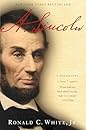
I have undertaken to try to read a biography of each of our presidents - it will not be easy because there is so much misinformation about them that gets printed these days - revisionist historians who want to remove religious motives from our founding fathers; slanderers who want to make anyone with fair skin prejudiced; the list could go on. Nonetheless, I have found some excellent bios. The latest one I read was A. Lincoln by Ronald C White, Jr. It is absolutely excellent! The personality of Lincoln just jumps off the pages. The turmoil of the Civil War weighed heavily on the heart and mind of this great man; he was against slavery, but equally against the division of the United States of America. His thoughts, prayers, sense of humor are all in this book. It is well worth reading!
There are a few incidents reported in the book that really struck me. One was a quote from Lincoln as he deliberated the war and divine will: "In the present civil war it is quite possible that God's purpose is something different from the purpose of either party--and yet the human instrumentalities, working just as they do, are of the est adaptation to effect his purpose." I believe this to be a comfort for Lincoln, as so many Union battles bore heavy losses during the course of our Civil War. I think it helped him overcome his bouts of depression and anxiety.
The other incident was just before the first Union victory in the field. Lincoln wanted to free the slaves with his Emancipation Proclamation, but not before there was a Union victory. Lincoln firmly believed that God was in control of the outcome of the war, but his faith was being tested. Finally, just the night before the first Union victory, Lincoln went upstairs to his private chamber, fell to his knees, and prayed that God might give his army a win so that he could free the slaves. He had carried the speech in his pocket, sometimes in his hat, but refused to issue the proclamation prior to getting some backing from Union loyalists; they needed something to bolster their courage, bring in recruits, before he made his daring move of emancipation, which so many of his supporters thought a disastrous idea. So, though without much backing, convinced that it was the right thing to do, and that God would ultimately decide the fate of the nation, Lincoln gave his now-famous Emancipation Proclamation.

Saturday, September 8, 2012

Warrior Monk

My church has a book club; it's called LitWits (I love the name). We meet every other month to discuss one of the books we have chosen to read. You don't even have to have read the book; you may want to come for the goodies or to find out if it is a book you would like to read. We recently read Warrior Monk by Ray Keating (I think it's his first novel, but don't quote me on that). The story revolves around a Lutheran pastor who was once a CIA operative, who gets caught up in an international tangle involving the pope in Rome. I was riveted from the opening lines to the very end - it went too fast! I may have to read it again because it was so amazing! Not only does the book talk about espionage, but it tackles faith issues; it's a deeper read than it seems on the surface. I especially like how Pastor Stephen Grant has to struggle between being the shepherd of a flock and his wide-open earlier life - and how not to get sucked back into that former employ.
Here is a passage that I think states well the difficulties facing Pastor Grant:
"In fact, Stephen himself was feeling a bit conflicted. His instincts as a pastor were to try to console, comfort, and provide hope - even speak of forgiveness. But given his recent experiences of having to kill Linda Serrano, the reacquaintance with Paige, being drafted by the government once more, and the terrorist roundup and attacks the previous week, Grant also sympathized with the impulse not to forgive. While usually preaching a good game on forgiveness, Grant had a very tough time living that particular message. He understood the desire to strike out in the name of justice, even if that justice was accompanied or even driven by a hearty dose of vengeance."
The story addresses issues of terrorist attacks (as seen in the quote above), the 9/11 attacks in the US, the concept of a just war, the place of faith in the face of evil, and so much more. The book is edgy, contemporary, fun, exciting. If you want more information on this book, go to PastorStephenGrant.com. It seems he has a new book out!

What is There to Read?

This is my first blog and it's about what I read, why I read it, and thoughts, etc. gleaned from it, with possible suggestions for further reading on a given topic, or perhaps why I won't read it again, or anything from the same author, and so forth. It's all about reading - a book, magazine, blog, link, news - whatever I read, I will probably comment on it in some fashion. Some of what I read comes from the local library, but most of it is contained in my extensive home library, combined with my husband's huge library where he works (because I have access to those books, as well). Sometimes I read books because they are recommended to me; other times I read books that just plain sound interesting; I also read books for a book club of which I am a regular attendee. My husband, on the other hand is always reading. Take this scenario as typical of him: He is sitting at the kitchen table eating a salad for lunch. What is there to read? Why the olive oil and balsamic vinaigrette bottles. He has used this to his advantage, winning games by being the only person who knows that ALL balsamic vinaigrette comes from Modena, Italy! He reads cereal boxes, jar labels, anything he can get his hands on; if he can't find anything readily available, he will bring whatever book he is reading to the table, take it in the car, stuff it in my purse - you get the idea. I usually read things with more substance and which take longer, but both of these notions have been disputed! So off we go - what is there to read? Right now I am reading Blogging for Dummies so I can get this blog off the ground and out into the blogosphere. Wish me good success!